Tuesday, May 11, 2010

Island Mountain Gacier


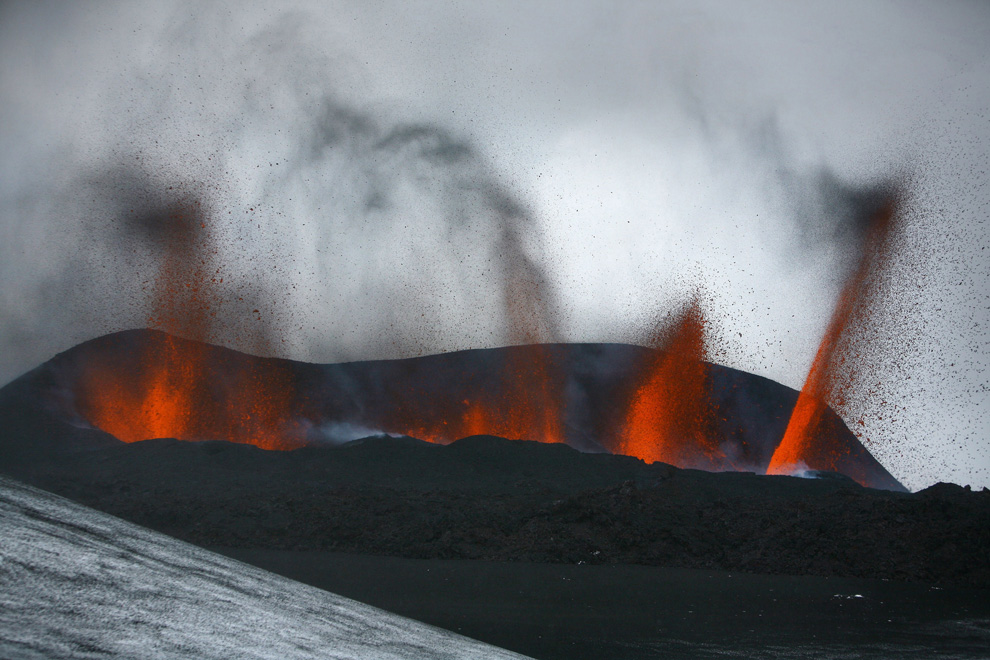
So much has changed in Iceland sense April 12th. What once seemed clean and green is now dark and dingy. Iceland once raked high on the EPI list, but now, it is not looking so good for the country.
This is an incorrect accusation. The true outcome is that the country is even greener. The stopped airline flights saved more carbon than the volcano could spew.
In short term, results could be disastrous. but that will not last long, a few months at the most. In addition, the gasses will not ill-effect out efforts against global warming, actually, the ash and sulfur dioxide may help cool our Earth.
In reality, the Island Mountain Glacier's eruption is not as large as others, and in the end, this will not hurt us, but help us

Co-written by:
-Tigrette Starlight Rose, Sibra Lynx and Amur LeoPard

Thanks to:
-Jr. Schoolastic
-C-The-Happy
-Tai and Tai again

Thursday, February 25, 2010

Orcas


The Orca, (orcinus orca) are the largest of dolphins. They have been referred to as 'Killer whales' and oddly enough 'blackfish'. As all dolphins are whales but not all whales are dolphins it makes the name 'Killer Whale' justifiale. They have no natural preadators, therefore, they are consiederd apex preadators. They live in large pods and are carniverous. Their diet ranges from salmon-sized fish to an animal the size of a walrus. They prefer colder waters but can be found in warmer waters too. They are identified by their black and white patterning.
A "Type A" orca

There are five types of orca whale known today. They are:
  • Resident: These orcas are the most common. They are found in the northern Pacific waters and hunt mainly fish and even squid. Their pods can be considered very tight family groups.
  • Offshore: These orcas can be found nearly anywhere in the oceans. They feed primarally on schooling fish but will stray from this catagory. Their dorsal fins are among the largest in the world of orcas and may or may not eat sharks
  • Transient: These orcas eat mainly marine mammals and nearly thothing else. They are mainly found in the artic and travel in small pods.
  • ''Type A'': These orcas resemble the steriotypic discription of an orca. They feed mainly on marine mammals; especially young whales of other sorts.
  • "Type B": These orcas are more grey than black. They have an extrodenarally large white patch around their eyes. They are slightly smaller than "Type A".
  • "Type C": These orcas are believed to be more closely related to "Type B" than any other type, as they live in the same region. (the Southren ocean) They also have more grey than black. The white is more yellow than most and the patchs around their eyes are slanted forward
Note: Orcas can be albino

Thursday, February 11, 2010

Ocelots


The ocelot (Leopardus pardalis) is found in south and central America. It has been reported that ocelots can be found in southern Texas. They are about the size of a housecat and resemble a cross between a jaguar and a clouded leopard when it comes to pattern. Ocelots are most likely the animal closest to the common ancestor of all the cats of today. From the Biggest tiger to the smallest kitten.
They were once endangered but are no longer. Ocelots very much resemble the type of domestic cat called the Ocicat, but are not related (closely).
Ocelots have multiple subspecies. The list below is from wikipedia.


Thanks wikipedia. You guys are awesome!

Wednesday, January 20, 2010

PLate Tectonics


Scientific study suggests that the continental movements are caused by the movement of the tectonic plates, parts of the lithospheric crust and above, floating on the asthenosphere; being partially molten has a slow current allowing the tectonic plates to move. There are eight major plates and many smaller ones. Where two plates meet is called a plate boundary, where most earthquakes occur. There are three types of boundaries; transform boundaries, where plates rub against one another, divergent boundaries, where the plates move apart and new crust can be created. Lastly, there are convergent boundaries. At these boundaries the plates move towards one another and can result in one being subducted under the other. The denser oceanic plates usually are the ones subducted. The melting of the subducted plate causes gasses to be released thereby forcing hot magma and gasses up through the cracks in the Earth causing volcanoes and fishers. This is the most likely cause of the Ring of Fire in the Pacific.
The continents have also been formed by the movement of the tectonic plates. There were also supercontinents, containing all of or most of the continents. Probably the most well known supercontinent is Pangaea, but there are others. Rodinia is the oldest known supercontinent, but it broke up in to eight pieces. Later on those eight pieces came back together and formed Pangaea. Pangaea lated broke in to two supercontinents known as Laurasia and Gondwana, which broke up in to the continents we know today

Saturday, January 2, 2010

Cheetahs


The cheetah (acinonyx jubatus) is the only species of big cat that isn't in the genus panthera. It is the fastest land animal in existence and can reach speeds of 70 mph. Its large heart and respiratory system are the main reason the cheetah can reach those speeds. The cheetah has a thin aerodynamic body with a large chest and small waist. Unlike all other big cats, cheetahs claws cannot be retracted. This adaptation gives them more traction while running.
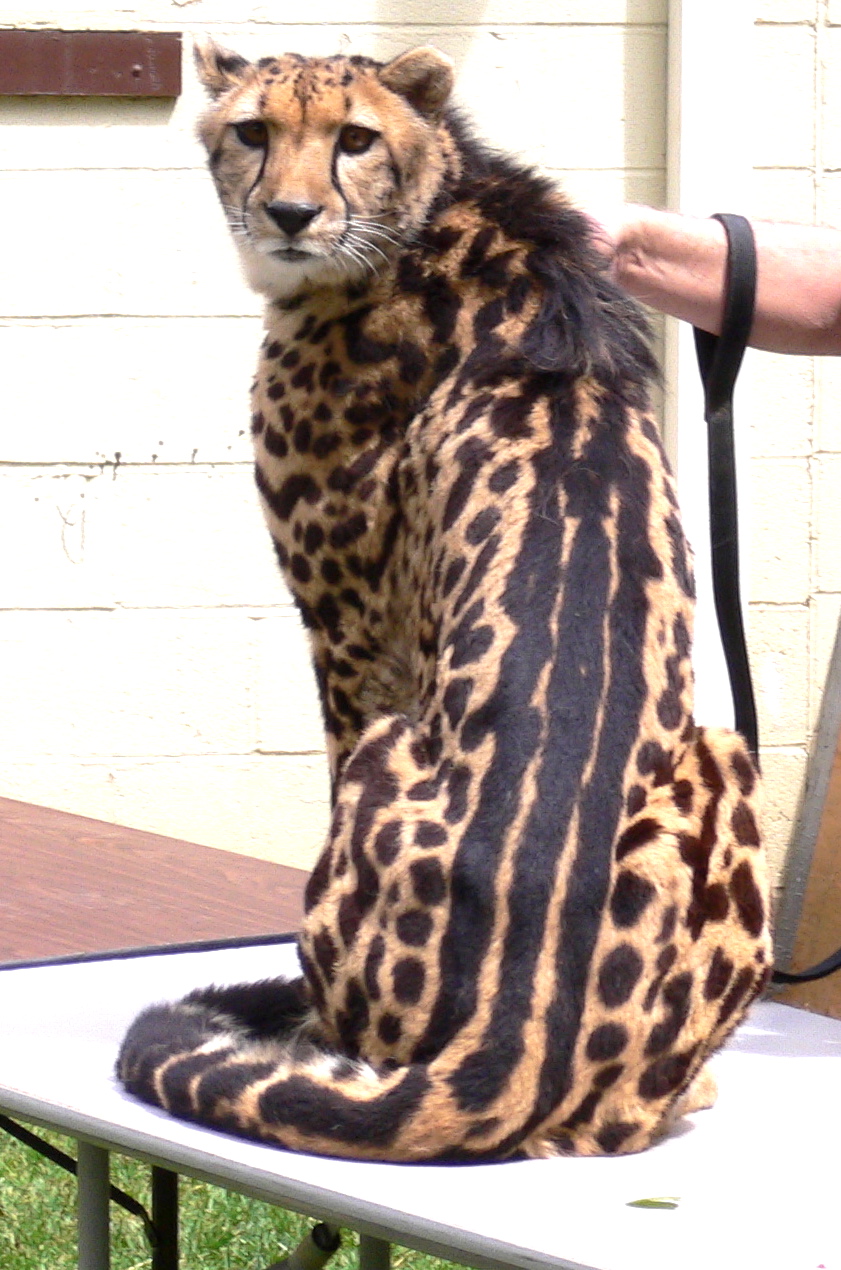
Cheetahs are very genetically close and this can cause them trouble when trying to find a mate. Close breeding is thought to be the cause of the spot mutation known as king cheetah. King Cheetahs were once thought to be a subspecies but science has proved that untrue.
There are six cheetah subspecies:
  • The Asiatic Cheetah (Acinonyx jubatus venaticus), is not confined to Asia. True they can be found in the Asian countries of Afghanistan, Iran, Iraq, India, Pakistan, Oman, Israel, Jordan, Saudi Arabia, Russia and Syria but in the African countries of Tunisia, Egypt, Mauritania, Western Sahara, Mali, Djibouti, Morocco and Niger. This is the most common cheetah subspecies.
  • Northwest African Cheetah (Acinonyx jubatus hecki), is found in Mali, Mauritania, Senegal, Niger, Benin, Burkina Faso, and Ghana. They may have ventured in to Nigeria but that is uncertain.
The other Cheetah subspecies have no common name. These are listed below
  • Acinonyx jubatus raineyii is found in eastern Africa in the countries of Kenya, Somalia, Tanzania and Uganda.
  • Acinonyx jubatus jubatus is found in southern Africa. They are found in the countries of South Africa, D. R. Congo, Mozambique, Zambia, Zimbabwe, Angola , Bostwana, Namibia, and Malawi
  • Acinonyx jubatus soemmeringii, is found in found in the Central and Northern African countries of Central African Republic, Cameroon, Niger, Nigeria, Chad, Ethiopia and Sudan.
  • Acinonyx jubatus velox, has been sighted and proven to be a subspecies, but not much else is known about this cheetah subspecis.
Please check out the map of Africa at the following link http://img372.imageshack.us/img372/4927/africants7.gif

Monday, December 21, 2009

Panthera Hybrids


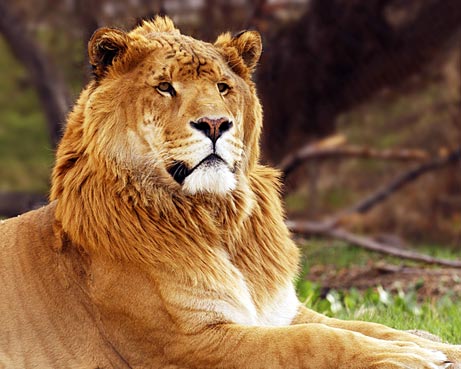
Many people know about Panthera Hybrids but might not know the term panthera hybrid. Panthera hybrids are crossbreeds between the big cats in the genus, panthera. The most common and possibly the most well known is the liger (tigress and male lion) or the tigon (male tiger and lioness) These big cat hybrids are 10-12 feet long and males have a 50% chance of a mane. Panthera hybrids have no scientific names but ligers/tigons have been known to be called (by some) panthera leoXtigris or panthera tigrisXleo and ligers have even been known to be called panthera ligris but none of these names are true scientific names. Many people have tried to breed tigers with jaguars or leopards but have had no or little success.
Ligers and Tigons are not the only panthera hybrids. There are Jaguar, Leopard hybrids too known as jaguleps, lepjags or jagpards, though jagulep is the most common term. Lions have also been successfully bred with jaguars and leopards. A lion, Jaguar hybrid is known as Jaglion or liguar and a lion, leopard hybrid is known as lipard or leopon. There is even a lion, jaguar, leopard mix comming from a female jagulep and a lion resulting in a lijagulep.
All male panthera hybrids cannot reproduce but females have the ability to have cubs.
The many attempts to breed tigers with jaguars or leopards have resulted with stillborn cubs or cubs that only survive a few hours. A tiger,leopard hybrid is known as a dogla or a tigard but all tiger x leopard hybrids have been stillborn. Tiger, jaguar hybrids are known as a jagger or a tiguar with mainly stillborns with one exception. The Altiplano Zoo has been lucky enough to produce a healthy male tiguar named Mickey, who. as of 2009, is two years old
Tuesday, November 24, 2009

Sturgeons


Sturgeons are some very peculiar type of fish. Sturgeon is actually the common name for the family

Acipenseridae which includes 26 species of fish. Sturgeons are thought to be one of the oldest boned fish in existance and have a habitat range from sub-tropical waters to sub-artic waters and are commonly found in North America, Europe and Asia (Eurasia). Sturgeons have long bodies and are bottom dwellers ranging from 4 to 18 feet long. Like catfish, sturgeons have barbals (the "whiskers") and have something known as scutes rather than scales. Sturgeons are mainly freshwater but have been known to venture out in to saltyer waters. In North America sturgeons can be found in the great lakes, the Mississippi River and even in some parts of Pennsylvania.


Below are the list of Species, from Wikipedia


---SCUTES-a derrmal bony plate